

For property managers, knowing the early warning signs of property deterioration in your commercial building is key to ensuring your business avoids costly repairs and continues to work at maximum output. While a lot of problems stay hidden until they become major, noticeable issues, there are a few early warning signs that can be spotted that can prevent issues from snowballing into much more complex and costly repairs.
We’ve compiled a list of problems a property can face and what you need to look out for that show that your commercial property is at risk of deterioration.
Damaged Timber
Timber is particularly susceptible to damage over a prolonged period of time. If not properly maintained and repaired when necessary, damaged timber can begin to heavily deteriorate and cause significant structural issues to your commercial building. Weakened timber, left to its own devices, can cause significant structural “sagging”, with bowing walls and ceilings, uneven floors, and, in unfortunate cases, structural collapse.
Heavily damaged timber is usually fairly noticeable; it will be visibly breaking down and often can have chunks torn off by hand or be noticeably bowing under the weight it is supporting as its structural integrity will have been weakened.
Early warning signs of damaged timber include:
- Soft or weakened timber
- Crumbling or damaged surfaces
- Discolouration
- Visible fungal growth
- Holes caused by wood-boring insects such as woodworm
- Timber that appears damp or unusually deteriorated or “warped”
As soon as damaged timber is spotted, it’s time to call in a professional. A damp and timber survey can find out the extent of the decay, what needs to be done, and what the source of the decay is.
Damp and Condensation Issues
If damp or condensation issues are found, it is imperative to find the source of the moisture. Major leaks and faulty pipework are often a dead giveaway, but sometimes the source of the problem isn’t always as obvious.
Damp is moisture that is trapped in a property, either in the air, walls, or structure. There are three main kinds: condensation, rising damp, and penetrating damp. You should be aware of the signs for each so you know what to look out for when doing routine property checks.
Condensation
Condensation forms when warm, wet air comes into contact with a surface that is colder than the water vapour, allowing it to turn into liquid upon impact. In commercial buildings, condensation can be particularly common in offices, kitchens, changing rooms, bathrooms, storage areas and spaces with high occupancy or inadequate ventilation.
Signs of condensation include:
- Droplets of water accumulating on window panes, window frames, and sills ● Wet surfaces in bathrooms and kitchens
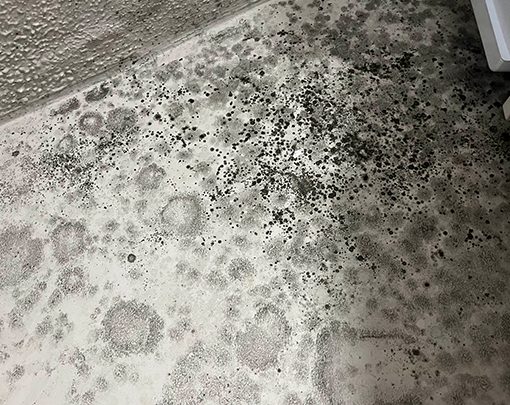
- Black mould
- Mildew on fabric
- Peeling decorations such as wallpaper
- Musty smell to a room
- Damaged timber
Rising Damp
Rising damp is groundwater rising through a building’s walls and masonry into the interior. Water naturally migrates this way, so buildings have things like a damp proof course (DPC) to prevent it from rising up into the structure. If the damp proof course is faulty or not present, water will migrate into a building, so it’s important to ensure your DPC is in place and working correctly.
Signs of rising damp include:
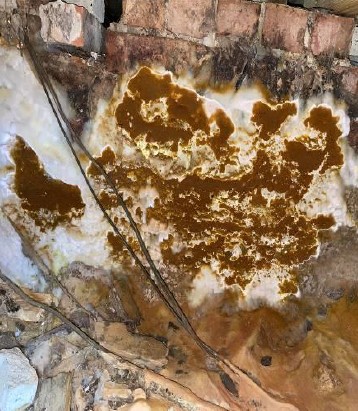
- Tide marks, which is discolouration and staining on the lower part of a wall ● Peeling paint and wallpaper
- Salt deposits left behind from moisture evaporating
- Rotting or damaged skirting boards and floor joists
- Musty, “damp” smell
Penetrating Damp
Penetrating damp is moisture that has penetrated into a building to cause damp on the inside, either through walls, roofs, doors, or windows.
Key signs to look out for include:
- Damaged or blistering plaster
- Peeling wallpaper and walls that feel cold to the touch
- Black mould and musty smells
- Damp patches on ceiling and walls, which often get noticeably larger after periods of rainfall
Structural Issues
Once a building’s structure begins to deteriorate, often the issue has progressed enough that major structural repair is often needed. Despite the obvious immediate damage structural decay causes, some early warning signs can often go overlooked.
Early warning signs include new or worsening cracks in walls, ceilings, and masonry. Other indicators include sticking doors and windows; if employees find themselves struggling to open and close these, it often means the walls are sagging and changing shape around them.
Uneven or sloping floors, sagging roofs, and walls that bulge or lean show that the structural integrity of your commercial building has been compromised and there is movement within the building.
Property managers should also look for concrete cracking or spalling, corrosion around structural steelwork and signs of water ingress that could compromise structural materials.
Leaks
Even the most minor of leaks can become catastrophic if left unchecked. Water damage is one of the leading causes of property decay, as damp materials are more susceptible to decay and rot, and often attract woodboring insects who infest damp timber.
While major pipework failures are often obvious giveaways, leaks usually stem from exterior issues like we mentioned above. Damaged roofs and defective guttering are some of the more common causes for leaks, allowing water to pool and penetrate, causing damp patches and dripping water inside the property.
Internal leaks should be immediately reported, logged, and monitored. Even if the leaks aren’t causing damage to the structural integrity of a commercial property, that can still cause damage to other parts of the building, result in pipework not working as effectively, and pose a threat to your employees’ health.
Cosmetic Interior Defects
A lot of minor interior defects often get overlooked as they’re not deemed serious or pressing enough, as opposed to more obvious problems listed here. However, problems such as peeling
paint, discoloured or peeling wallpaper, or damaged plaster are often telltale signs that much larger problems are wreaking havoc below the surface.
Paint or wallpaper issues can sometimes be genuine cosmetic defects, either from poor application or just general wear and tear, but they’re still worth investigating as it can indicate moisture beneath the surface, which may be causing structural damage behind the scenes.
Rather than repeatedly repainting or repairing the affected area, it is important to consider why the deterioration is occurring in the first place. Treating the underlying cause is more effective than continually addressing the symptoms.
External Damage
A lot of external damage to a commercial property often gets overlooked, often due to being considered “cosmetic” or unimportant. However, lots of defects in the exterior of a building often act as a pathway to more serious problems inside the property.
Problems such as:
- Missing, damaged or slipped tiles
- Blocked or defective gutters
- Defective mortar and pointing
- Cracks in the masonry
- Defective flashings
Can all lead to water penetrating the building and cause significant damage inside. Damaged roofs often lead to the most catastrophic, immediate levels of water damage, often leading to significant leaks which can pose a threat to your company’s electrics and structural integrity.
Blocked or leaking gutters can also cause significant water ingress inside a property, as it allows for water to continually pool in one specific spot, rather than being diverted away from the building. Gutters should be regularly inspected and cleaned to prevent this.
Other surface exterior issues such as defective flashings, mortar and pointing, or cracks in the masonry effectively create “entry points” for water. While not as immediately impactful as having a faulty roof, water can still slowly seep into these entry points and cause steady damage inside that might not become apparent until the problem has become much larger and more difficult to resolve.
Basement Leaks and Deterioration
Worth its separate category on its own, basement problems are often overlooked sheerly because… they’re in the basement. Depending on business type and service, problems with basements frequently go ignored, either from lack of awareness or neglect, particularly if the
basement isn’t used as an active working space. As such, a lot of problems tend to go unnoticed until they’ve become major structural issues.
Early warning signs that your basement is deteriorating include:
- Minor leaks and damp patches, indicating water ingress
- Sinking or uneven floors
- Sagging and cracked walls
- Visible mould or salt migration
How to Manage Property Deterioration in Commercial Buildings
Routine inspections for both the exterior and interior of a property are key to ensuring any potential problems are nipped in the bud as soon as they rear their heads. As a property manager, it is vital to know what to look out for so the early warning signs aren’t missed and left to develop into what inevitably becomes a more costly repair bill at the end.
Particular attention should be paid during these inspections after bouts of severe weather, such as heavy and long periods of rainfall, as this is when existing problems become more apparent and often become worse.
We compiled a comprehensive list of things you should be routinely inspecting as a property manager for commercial buildings, which you can read here: The Ultimate Commercial Building Maintenance Checklist for Property Managers.
Summary
Knowing your company’s property inside out and knowing what to look for vs what doesn’t look quite right, is vital to ensuring the building remains working at maximum capacity. Any issues should be quickly reported and logged, and, if needed, scaled to having a professional surveyor come inspect it before advising what steps need to be taken next.
If your commercial property is suffering from any of the aforementioned issues, call us on 0800 288 8660 or book a survey online. We will send a surveyor out to you to assess the damage and provide you with a quote and tailored solution for your problem.