

Finding damp anywhere in your property is an unpleasant experience, but sometimes there are areas where damp is just that little bit more annoying and noticeable.
Skirting boards are incredibly visible, and are often something desirable – especially to people looking at a property to buy and rent. With them being such a visible component, they often act as an informal guide to the condition of the property, and if the skirting board is riddled with rot, or showing the visual degradation associated with damp.
So, if you suspect that your skirting boards have been affected by damp, how can you find out for sure, and what steps can you take to eliminate the damp from continuing and spreading further through your skirting boards.
Do My Skirting Boards have Damp?
First, we have to address one of the main points of the article, and that’s that typically timber cannot have damp. Damp usually presents through brick and stone work, rather than timber, and what you might think of as ‘damp’ in a skirting board is actually a form of rot.
There are two distinct types of rot, wet rot and dry rot. Don’t be fooled by the names, both of these rots feed on the moisture within timber, the only difference between the two being the amount of moisture available in the timber for the rot to feed on.
We use the word feed here quite literally, as both wet and dry rot are actually a fungus. This fungus lands on timber, and the damp soft wood provides the perfect place for those fungal spores to germinate and grow.
You will find that the fruiting fungus feeds on the moisture within the timber itself, causing it to become incredibly dry and brittle. Now, depending on the type of rot present the fungus and overall state of the timber after rot has grown might be slightly different, so for more information on the differences between dry rot and wet rot you can read our blog here.
However, we haven’t answered the question as to why or how the rot has found its way into the skirting boards in the first place.
Why Do My Skirting Boards Have Rot?
Rot doesn’t just appear on timber, the conditions have to be right within the wood itself for either dry rot or wet rot to begin to grow. So, when we are talking about skirting boards, we are often talking about damp.
With skirting boards sitting on the floor of your property, they are prone to several different types of damp that might not affect timber in say, a roof, or an elevated cabinet.
Take rising damp for example.
Rising damp is the process of moisture travelling up into your properties walls through a process known as capillary action. Usually, rising damp is down to the property not having a functioning DPC in place, and therefore nothing to stop the moisture travelling.
Typically, rising damp will travel to about a meter above your floor, so depending on the amount of rainfall and the level of moisture in the ground around your property, you could see quite a heavy damp patch in your walls rising out of your floor.
So, with that in mind, you can see how rising damp might affect a skirting board, as they are literally attached to the point in your wall that the rising damp effects.
The moisture in your wall from the rising damp will transfer into your skirting board, elevating the moisture level within the timber and making it the perfect breeding ground for either wet or dry rot, depending on the moisture level itself (more on that below).
Until the rising damp itself has been treated any new or replacement skirting board affixed to your walls is only going to degrade in the same way, as the damp in the wall continues to transfer to the newly affixed skirting.
The same problem can be said of penetrating damp. Penetrating damp is a form of damp that stems from a fault within a properties facilities or features. It could be a leaking gutter, a blocked drain, or commonly (when it comes to skirting boards) a leaky pipe.
Pipes within your walls or below your floorboards that leak are an incredibly common source of damp, and depending on the strength of the leak and the amount of time the leak has been active, your walls and below floor cavity space could be quite damp.
Just as rising damp might, this can easily lead to a situation in which your skirting boards take on an excessive amount of moisture and develop a dry or wet rot problem.
Essentially, any form of damp present in the walls or space below your floorboards is putting your skirting boards at risk of developing dry or wet rot. The challenge is figuring out which is present in your skirting.
What Kind of Rot Do My Skirting Boards Have?
When it comes to dry rot and wet rot, you would be right in thinking that there are plenty of similarities between the two, but they are in fact two separate types of fungus. You can read more about the differences between wet rot and dry rot here, but we will outline some differences here for help in identifying what might be in your skirting.
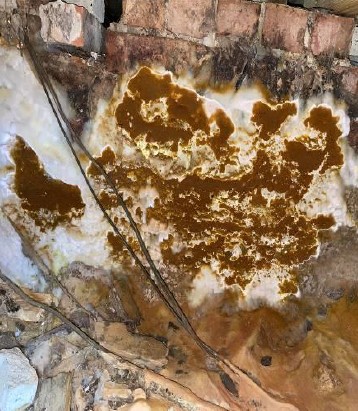
Firstly, dry rot is distinctive because of the yellowy, orangey hue to the fruiting body of the fungus that grows. Dry rot will leave your timber crumbly as well, ruining any chance of it being structurally sound.
Another thing to remember is that dry rot will find its home in timber that is less porous, with a moisture content of about 20%, whereas wet rot will attack timber that has a higher moisture content, about 50%.
You will also notice that wet rot might produce a black fungus, and leave your timber soft and spongy rather than crumbly like dry rot might.
Neither of these types of rot are desirable, and realistically it might be hard for a layman to understand or differentiate between the two. For clear, understandable results on what type of rot might be present in your skirting boards, its best you consult with an expert, and learn more about the type of rot affecting your skirting board, and the steps you need to remove it, and treat the timber it has been feeding off of.
How Can I Stop Rot in My Skirting Boards?
The only sure fire way to make sure that dry or wet rot won’t return to ruin your skirting boards is to remove the source of the moisture feeding the rot itself. Just replacing your skirting boards isn’t going to be enough if you still have rising damp in your walls. Instead your new skirting is going to suffer the same fate as the old, and will continue to do so until the damp problem has been remedied.
The best way to make sure that the root cause of the problem has been taken care of is to have a proper damp and timber survey carried out in your property from an organisation accredited by the PCA.
A survey from Timberwise for example will identify the extent and type of rot in your property, and also establish the root cause of the rot itself, with the report produced following the survey outlining the best way in which the damp can be treated and the timber repaired or replaced.
Our team can work from this report, tackling the damp quickly, then repairing or replacing your timber as needed for a fast and effective solution regarding skirting boards afflicted by rot. You can organise a damp survey by filling in the form below, or you can give us a ring and book a survey over the phone. Just call 0800 288 8660, and we will be happy to help.
FAQs
Why Are My Skirting Boards Damp?
Skirting boards don’t become damp on their own. They absorb moisture from an underlying source, such as rising damp, penetrating damp, or a plumbing leak. Over time, prolonged exposure to moisture can lead to timber decay, including wet rot or dry rot. Identifying and treating the cause of the damp is essential before repairing or replacing the affected skirting boards.
Can Damp Skirting Boards Be Repaired, or Do They Need Replacing?
This depends on the extent of the damage. If the timber has been significantly weakened by rot, replacing the skirting boards is often the most effective solution. However, replacing the timber alone won’t resolve the problem if the source of moisture remains. Any damp issue should be addressed first to help prevent the replacement skirting boards from deteriorating in the same way.
What Causes Skirting Boards to Rot?
Skirting boards rot when they remain damp for prolonged periods, allowing fungal decay to develop within the timber. Common causes include rising damp, penetrating damp, leaking pipework, and other sources of excess moisture. Whether it’s wet rot or dry rot, eliminating the source of damp is the first step towards a long-lasting repair.
How Can I Tell if My Skirting Boards Have Wet Rot or Dry Rot?
Wet rot often leaves timber feeling soft, damp and spongy, while dry rot can cause timber to become brittle, cracked and crumbly, sometimes with visible fungal growth. As both types of decay require different treatment approaches, a professional timber survey is the most reliable way to identify the problem and recommend the appropriate remedial work.
Will Replacing Damp Skirting Boards Fix the Problem?
No. Replacing damaged skirting boards without treating the underlying source of moisture is unlikely to provide a permanent solution. If rising damp, penetrating damp, or another moisture issue remains, the replacement timber may eventually suffer the same damage. A professional damp and timber survey can identify the root cause and ensure the correct repairs are carried out to protect your property in the long term.