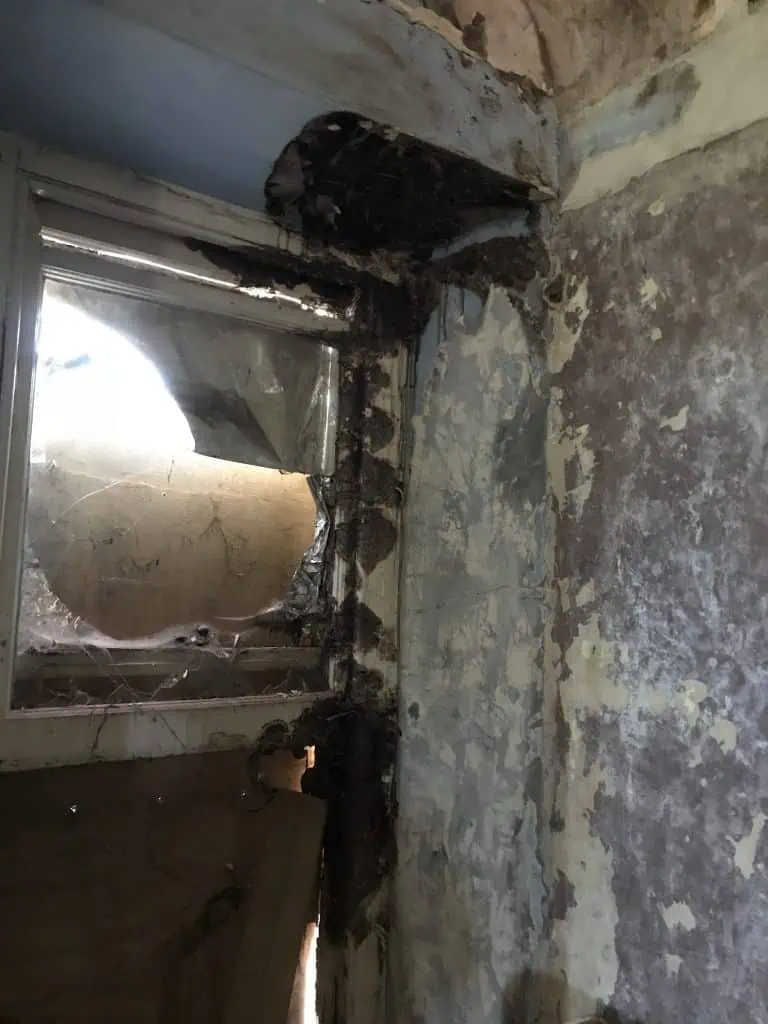


If you’ve ever received a home buyer’s report, you might have spotted the term “wood boring insect” on it. Often, a lot of surveys include checks for pest activity, but what actually is a wood boring insect and why are they such a problem?
What is a Wood Boring Insect?
A wood boring insect is an umbrella term that covers all species of beetles that, as larvae, eat and destroy timber. The insects lay their eggs inside the wood and as the larvae hatch and grow, they slowly chew through the wood as a food source, slowly weakening the timber.
Wood boring insects are usually found in areas within a property that are poorly ventilated with a high humidity such as for example a sub floor crawl space. This is usually because these conditions become perfect for the larvae to hibernate and transform into a woodworm beetle.
Why Do Wood Boring Insects Attack Timber?
Wood boring insects, just like wood rotting fungi, tend to attack when dampness is affecting your property. While wood borers primarily tend to attack sapwood, heartwood is susceptible from being attacked as well. There are cases where death watch beetles can attack dry timbers in instances where the old flight holes have been dislodged.
Signs of Wood Boring Insect Infestation
Spotting signs of wood boring insects can be a difficult task and if not spotted earlier enough, can stay hidden between 3-5 years depending on species. The typical signs of a woodworm beetle are: The exit holes of the timber, dust created by the woodworm will left on the wood, tunnels will be left where they have been eating through the timber.
The Different Types of Wood Boring Insects
The Common Furniture Beetle
The most frequent wood boring insect we come across in our work is the common furniture beetle, which favours softwoods like pine. As pine is one of the most used woods in structural timber, the common furniture beetle is commonly a problem. The female insect lays the eggs inside the cracks of the timber and these will hatch within a few weeks. The larva will mature into a woodworm beetle over 3-4 years boring its way through the wood.
Deathwatch Beetle
The Deathwatch Beetle is the second most common infestation in the UK. This is one of the most damaging wood boring beetles that can affect your property, as it tends to target timber that features as part of the structure of a property, rather than ornamental or aesthetic wood. Deathwatch beetles prefer to attack timbers that have a moisture content of over 14%.
This beetle will be found in buildings where there is dampness or there are water leaks. Infesting hardwood timbers can cause significant structural damage as it can consume the core of the timber. The life cycle of this beetle is between 8-10 years.
House Longhorn Beetle
House Longhorn Beetle is the most devastating beetle, as it doesn’t necessarily need heavily saturated wood to infest and it is much larger compared to its cousins. This type of wood boring insect attacks the core of the timber if it is not dealt with swiftly in the early stages. Its effects are devastating enough that if they are found in a property it is reported to the Building Research Establishment (BRE).
This beetle is often found in new homes and attacks younger timber. The life cycle is particularly long compared to the other insects on this list, reaching a lifespan of up to 10 years, though this does depend on the surrounding environment. They’re often found in and around Surrey but have, on rare occasions, been spotted elsewhere.
Wood Boring Weevil
The Wood Boring Weevil is a common species found in wet timber and often discovered in joist ends that are suffering from dampness.
This section probably needs a little bit more info
How to Get Rid of Wood Boring Insects
The first step in getting rid of wood boring beetles from your property is to treat whatever the cause of the damp is. Predominantly, dry timber is immune from wood boring beetle infestation as they prefer damp timber, so making you’re your timber is damp free is the perfect first step. Any woodworm treatment specialist will always have the aim of reducing the moisture content of infested timber to below 15%.
If the damage done by the wood boring insect to the timber is severe enough, then the timber may need replacing. A chemical woodworm treatment can be used to target the insects inside the wood directly, which works bykilling the insects as they exit the wood and come into contact with the treatment that has been sprayed onto the surface of the timber
Contact a Specialist Today
If you think your home might have a woodworm infestation, or if you have received a home buyer’s report stating that there might be one in the property you’re about to buy, speak to one of our experts today for advice, or to arrange a timber survey.
Our surveyors are PCA accredited and are able to confirm if there is a live infestation and identify the type of beetle that has infested the property as well as finally determine the best treatment moving forward. To arrange a survey contact an expert on 0800 288 8660, or fill in our online contact form
For more information on wood boring insects and our pre-purchase damp & timber surveys see our Damp & Timber page.