



As a property care company, a large share of our work occurs within the homes or commercial properties of our clients. Often, our clients are already living in their homes or occupy their businesses daily, they notice a warning sign of damp or fungal decay, and ask one of our surveyors to attend the property to diagnose and treat the issue.
Health and safety concerns in an occupied property are different to those on a live construction site. While the hazards and risks to health are potentially more threatening, everyone on a construction site has specialist training and a working knowledge of how to identify these risks and prevent harm and injury to themselves and others.
Conversely, occupied properties have their own set of potential risks which may not be apparent at first glance. Pets, the vulnerable, and those using public access around a property might be more at risk when exposed to work areas during treatment on a property. The question then becomes: how do we protect our clients and their belongings to the best of our ability, especially when they might not have the same health and safety experience as our specialists?
In this blog, we’ll cover how we protect the residents of a property while working safely in occupied properties, including the extra measures taken to protect vulnerable occupants, and how this protection extends to members of the public outside a work area.

Protecting Your Home and Family
Much of our work occurs within or outside a client’s home. This often starts as a client finding signs of an issue, then asking for a surveyor to diagnose and provide a treatment plan to remedy it. However, unlike a vacant property or one under construction, an occupied property carries its own set of risks.
Primarily, protection of the inhabitants and their property tops that list. To that end, we employ several different methods to ensure that any stored items are protected, and that the health of anyone living in the property is not adversely affected by our work.
Safe Access Routes
A key consideration when working on an occupied property is how to access a property safely. Our specialists will confirm the best route to use with our client, both for technicians and their tools. They will also use a route that doesn’t restrict access from our clients in the event of an emergency. If this isn’t possible, our specialists will work with these risks in mind, communicating the steps required to evacuate safely through a work area if necessary.
When securing an access route, a specialist will prioritise one that is clear of obstacles which limits the risk of slips and trips. They will also identify specialised access equipment required to safely navigate to a work area during treatment. This might be a simple as a ladder to access a roof void, but could extend to scaffolding or mechanical lifts in the case of larger properties. In each case, ladders and scaffold access will be made secure at the end of a workday to prevent unauthorized climbing.
Polythene Protective Sheeting
Also known as dust sheets, this is often the first thing that a technician installs when they first attend a property, before beginning any treatment work. Polythene sheeting is a flexible but durable plastic cover that can be rolled out and cut to size. It is used as a protective cover over decorative flooring or furniture to prevent scratching and blemishes.
Another use for polythene sheeting is to create a designated work zone within a property. Polythene sheeting can be hung in doorways to prevent the transmission of dust into other areas of a property. This reduces the likelihood of harm to any inhabitants, especially those with respiratory conditions such as asthma.
Noise Reduction
Another factor in keeping our clients safe is the management of noise. Tools such as drills are necessary for installing a chemical damp proof course or a toxic box to prevent the spread of fungal decay. An unfortunate consequence of these tools is that they produce high levels of noise, which can easily transmit through the walls even if the doors to the work area are shut.
There are several steps our teams take to limit the transmission of high noise levels. Our technicians conduct weekly equipment checks to ensure that all equipment is maintained prior to work. This includes regular maintenance such as changing out worn our parts, or lubrication to reduce friction from bearings and gears which can increase noise levels.
Another key component of noise management is communication. Use of noisy equipment is restricted to standard daytime hours to prevent noise nuisances, and clients are informed of their use prior to work beginning. Often, our teams will work with our clients’ schedules during treatment to prevent noise during inappropriate times.
Tool and Chemical Storage
Depending on the type of work our technicians are conducting on a property, it is necessary for them to access tools and chemicals to complete any treatments. In the case of chemicals, these are closely monitored by legislation such as Control of Substances Hazardous to Health (COSHH), which requires employers to protect employees and others from exposure to dangerous materials in the workplace (gov.uk, 2002). While working with these chemicals and tools, our technicians limit access to a work area, preventing our clients from encountering them or any potential fumes. Our work vans are always secured to prevent access while a technician is working within a property.
During treatment with tools or chemicals, our technicians perform thorough site inspections, cleaning any spills immediately with disposable spill kits. They will also remove any debris or tools that could cause injury if a client were to enter a work area after work had concluded for the day. By monitoring and actioning these issues as soon as possible, this limits the risk of injury from slips, trips, and falls, as well as preventing damage to existing fixtures.
Ventilation
Proper ventilation is essential in property care treatment to reduce the likelihood of respiratory issues, as well as preventing damage to a client’s property. Under the Workplace (Health, Safety and Welfare) Regulations (1992), employers must ‘ensure that enclosed workspaces are ventilated with a sufficient quantity of fresh or purified air’ (Health and Safety Executive, 2013).
Ventilation comes in a variety of forms, both mechanical and passive. Trickle vents on windows, air bricks, and wall vents can all passively ventilate a work area. In addition, extractor fans in kitchens and bathrooms, or larger freestanding fans in other rooms can promote additional ventilation where required. A risk assessment prior to work beginning will confirm how much ventilation is necessary to promote fresh air flow during work.

Protecting Vulnerable Occupants
For many occupants, the control measures employed by our technicians significantly reduce the likelihood of damage to both property and the health of any occupants. However, there are also specialist cases where additional measures may be required to ensure the safety of any occupants that are particularly at risk of further complications.
Vulnerable Occupants
Vulnerable occupants can be anyone from infants and pregnant mothers to the elderly or those with chronic health conditions, especially respiratory conditions. Airborne dust, chemical fumes, and structural hazards all increase the risk of aggravating existing health conditions, as well as the risk of injury by entering an active work area.
To further mitigate the risks of these hazards, it may be necessary to limit access to specific areas of a property during work. Work areas may need to be sealed during high-risk activities to prevent dust from escaping into other areas of a property. In cases where property damage is extensive, it may be necessary to temporarily relocate any at-risk parties during work to prevent exposure to any harmful fumes or dust that may worsen their health.
Pets
Pets are at the same or a greater risk of injury as humans, and can develop respiratory complaints from dust inhalation or injury from accessing work areas during treatment. For animals such as birds, fish, reptiles, or rodents that are kept in enclosures, temporarily relocating these animals to rooms far away from noise and dust is usually enough to protect them from harm and distress.
For free-roaming pets such as dogs and cats, it’s also important to note that protection goes both ways, and protecting our technicians from pets is also a consideration. It’s not uncommon for normally friendly animals to become agitated or frustrated from increased noise levels, which could result in attacking technicians or damaging their equipment. They could also equally be inquisitive about new people and smells, and enter restricted workspaces inadvertently when hazardous chemicals are in use or during dust-creating activities. Limiting access to a work area or our technicians is crucial to protect both parties from harm.
Protecting Members of the Public
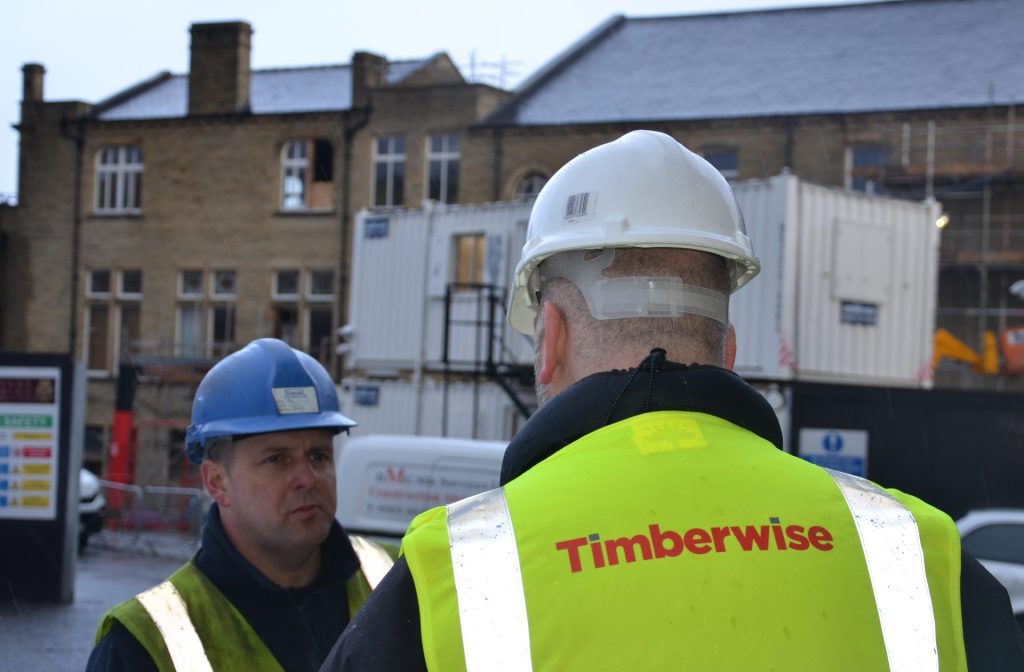
Of course, it’s not just enough to consider our clients within a property. Often, our vans are parked a short distance from a property, and contain many of the tools and chemicals our technicians need access to during treatment. Travelling between the van and the property creates risks for members of the public around a work area, whether in communal areas within commercial buildings or on a footpath outside a domestic property.
The Health and Safety at Work Act (1974) states that employers ‘are legally required to ensure that the general public is not exposed to health and safety risks from their construction operations’ (gov.uk, 2015). Here are some of the additional measures our technicians take to ensure the safety of any member of the public around our work areas.
Barrier and Warning Signage
In addition to the plastic sheeting used to create a clean work area, our technicians install barriers and warning signs outside of public work areas to warn any passers-by of the ongoing work and prevent access to these areas. These warning signs are a legal requirement that informs anyone walking by a work area of the use of hazardous chemicals, dangerous tools, or access equipment like scaffolding. Warning signage is categorized by colour and shape, and includes identifiable iconography so that hazards are understood regardless of language.
Trip Hazard Controls
Trips and slips are one of the most prevalent risks in construction and the property care industry. These risks are increased in public areas where MOPs require access to their own flats or workspaces, often passing by designated work areas along the way.
To prevent trips and slips, our technicians employ a clean work area policy both inside and around a work area. Work areas are regularly cleared of debris to remove debris that could cause an accident, and any chemical spills are cleaned with appropriate tools and PPE. When being transported for removal, our technicians only handle a reasonable amount of debris, and any dropped materials are picked up immediately, ensuring no hazards are left at times while technicians aren’t in attendance.
Additionally, where possible, our technicians adopt a cable-free approach, and only use battery operated tools while on site. These batteries are often charged off-site, or in a designated area away from public access, to prevent tripping over cables while their equipment is charging.

Conclusion
Timberwise is committed to providing a safe working environment not only for its colleagues but also to prevent health concerns in its clients. Timberwise achieves this through a combination of using the correct techniques, exhibiting the ideal behaviours, and caring about the consequences of its actions that could result in preventable harm to its clients as well as its staff.
Creating a safe working environment is paramount both for our specialists as well as our clients. Where our clients may not have knowledge of potential hazards within their home during treatment work, our specialists are appropriately trained to identify any risks and hazards that might cause injury, and employ the necessary steps to prevent damage to our client’s belongings.
Specialist contractors are also held to stricter standards when considering their own health and the health of others. Timberwise is accredited by organizations such as the Property Care Association (PCA), and as part of this relationship, must adhere to the highest standards of health and safety. These standards extend to our clients, and we treat them, their families, and their property with the greatest respect whenever we are invited to provide treatment on their behalf.
FAQs
How do Contractors Protect Homes During Work?
Contractors protect homes during work through a combination of polythene protecting sheeting, isolating work areas, ensuring ideal ventilation, and safe use of hazardous tools of chemicals. Our technicians communicate with clients prior to the use of these tools to reduce the impact of noise- and dust-generating activities.
Is Damp Proofing Safe Around Children and Pets?
No, damp proofing is not safe around children and pets due to the potential exposure to hazardous chemicals and dangerous tools in the immediate work area, which can cause illness or injury. Our technicians prevent access to work areas to reduce the likelihood of exposure to these risks. Once damp proofing work has concluded and a thorough site clearance has taken place, previous work areas are safe to access and use for both pets and children.
How are Communal Areas Kept Safe During Works?
Communal areas are kept safe during works by installing protective polythene sheeting, managing noise levels, and preventing access to hazardous materials and tools. Additional measures such as warning signage, barriers, and trip hazard controls may be employed to protect members of the public from other health hazards.
Can you Stay in a Property During Damp Treatment?
Yes, you can stay in a property during damp treatment. However, it is recommended that you and any other occupants do not enter a work area during any damp treatment to prevent any exposure to health and safety risks. We may recommend temporarily relocating any at-risk parties during treatment to limit any exposure to irritants that might exacerbate existing health conditions such as respiratory or noise-related ailments.


