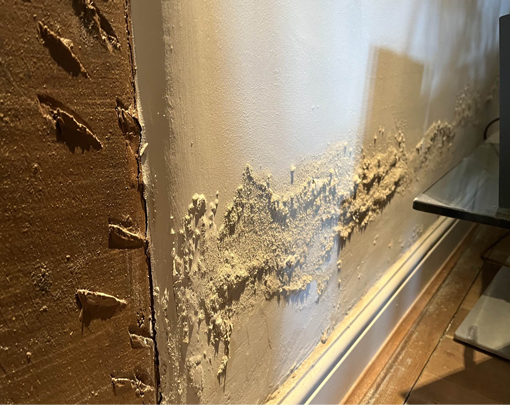












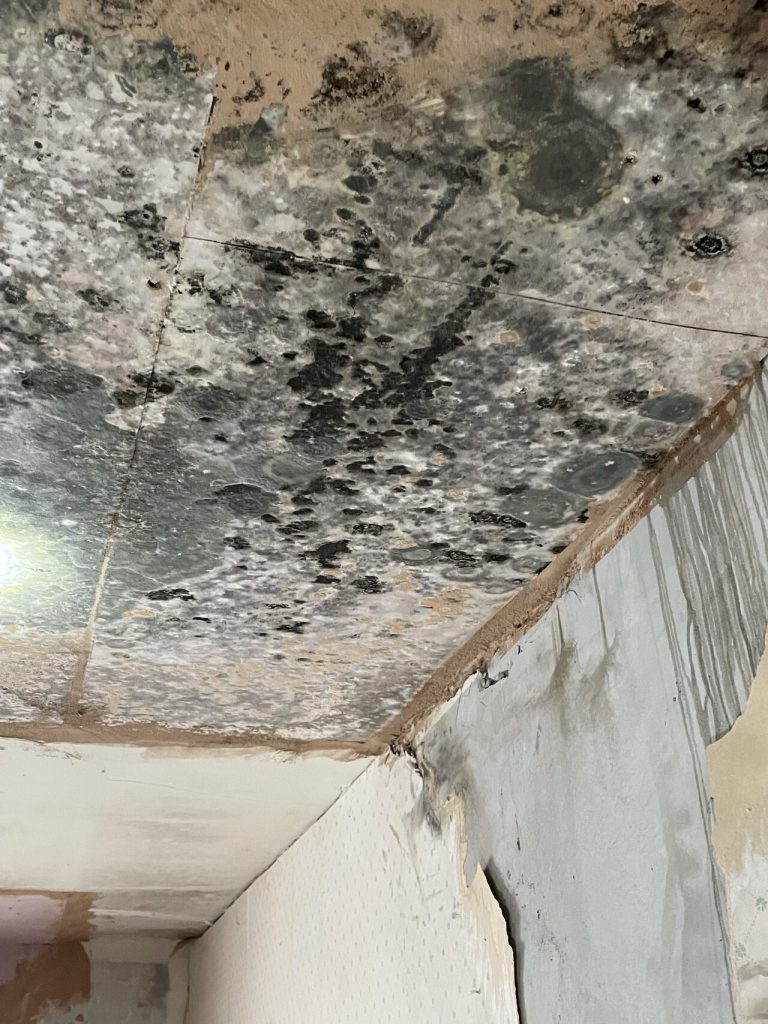

Damp can be difficult to diagnose in a building, no matter how old it is. External ground levels, damp proof course failure, bridging plaster, external defects, and failed rainwater goods can all provide a moisture ingress route.
Depending on the location of ingress, damp can create different symptoms inside a property. Suspended timber floors might warp or creak, you might find a damp patch on a solid brick wall, or you might find water pooling in below-ground structures like basements or cellars.
That said, a damp patch on a wall doesn’t necessarily mean a property needs a new damp-proof course. For example, a lack of ventilation might cause a damp patch to form from condensation instead. When diagnosing a damp issue, it’s important to assess a property as thoroughly as possible to ensure that any overlapping issues are caught and remedied to prevent recurrence.